Do’s & Don’ts for Auspicious Vastu for the Entrance of Your Home
Everyday Vastu do's and don'ts for the entrance of your home: what to keep at the door, what to remove, how to light and care for it, and which surroundings to avoid.
In this article
For an auspicious entrance, Vastu suggests a main door in the north, east or north-east that is clean, well lit, noise-free and clear of clutter. Avoid dustbins, shoes, dark corners and obstructions in front of the door, and keep the door repaired and painted in a light or natural colour.
This guide is about living with your entrance day to day: what to keep near the door, what to remove, how to light and maintain it, and which surroundings to avoid. For building the door itself, see our 10 tips for building the main entrance door.
Quick summary: entrance do's and don'ts at a glance
| Direction or feature | Do | Don't |
|---|---|---|
| North-east (Ishanya) | Keep the entrance area open, bright and clean | Store shoes, bins or heavy items here |
| North | Use for the main door where possible | Block the approach with vehicles or clutter |
| East | Use for the main door where possible | Leave the entrance dark in the evening |
| South-west (Nairutya) | Keep a door here closed and well lit if it exists | Use it as the main daily entrance by choice |
| Door finish | Natural wood or light, warm colours | Paint the main door black |
| Door care | Oil hinges and repair cracks quickly | Fit a self-closing mechanism that slams |
| Outside the door | Doormat, nameplate, healthy plants | Dustbins, piles of shoes, broken items |
Do's: what to keep at your entrance
A main door in the north or east
Vastu guidance prefers the main entrance in the north or east, with the north-east often described as the best position. Our guide to the best main door position by side explains how to place a door on west- and south-facing homes too.
A large, well-lit door that opens inwards quietly
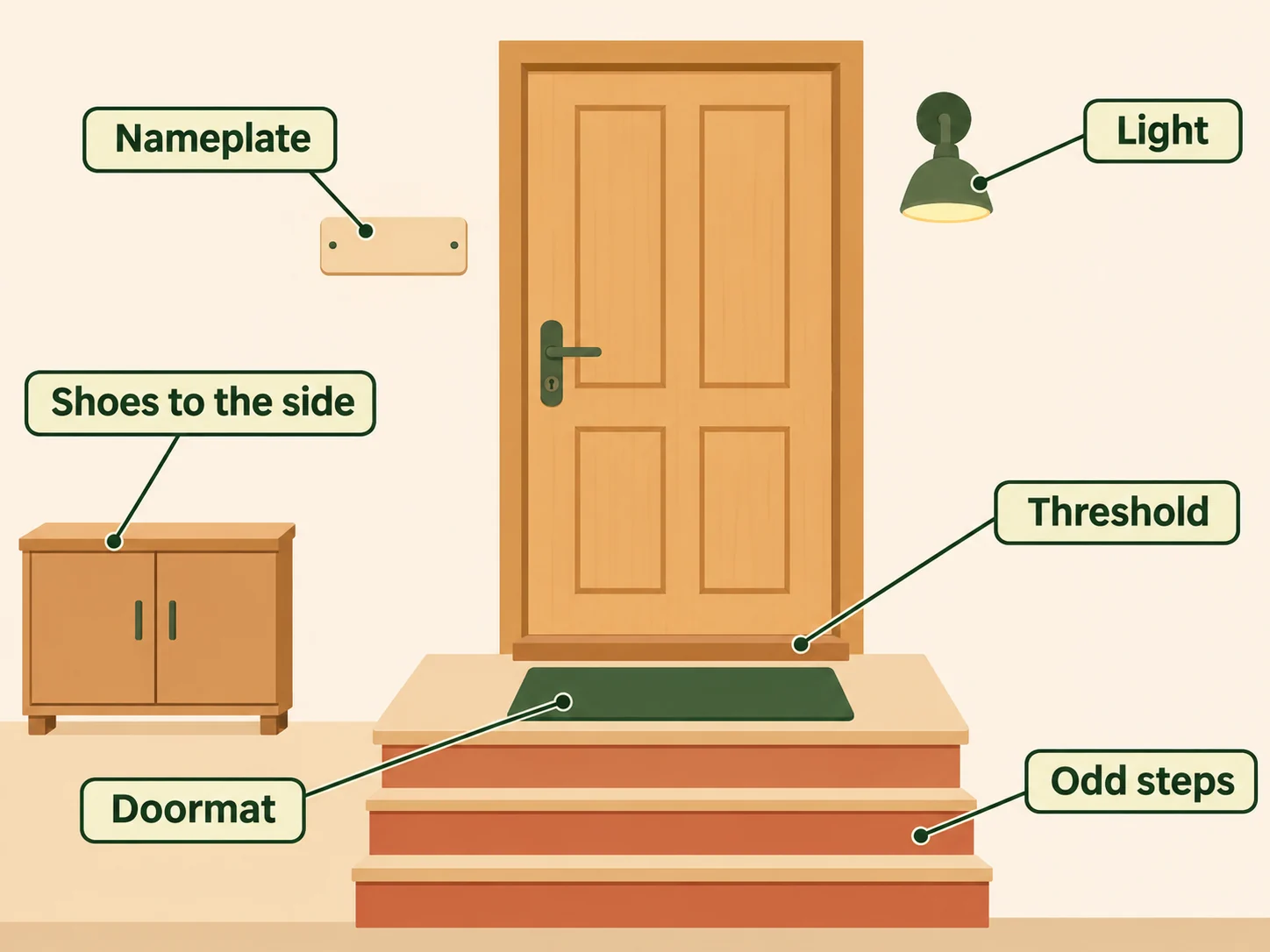
The main door is traditionally the largest door in the home, made of good-quality wood, with a height about twice its width. It should open inwards in a clockwise direction and move without creaking. Bright, warm light at the entrance makes the door welcoming and safer after dark.
A nameplate, a clean doormat and tidy surroundings
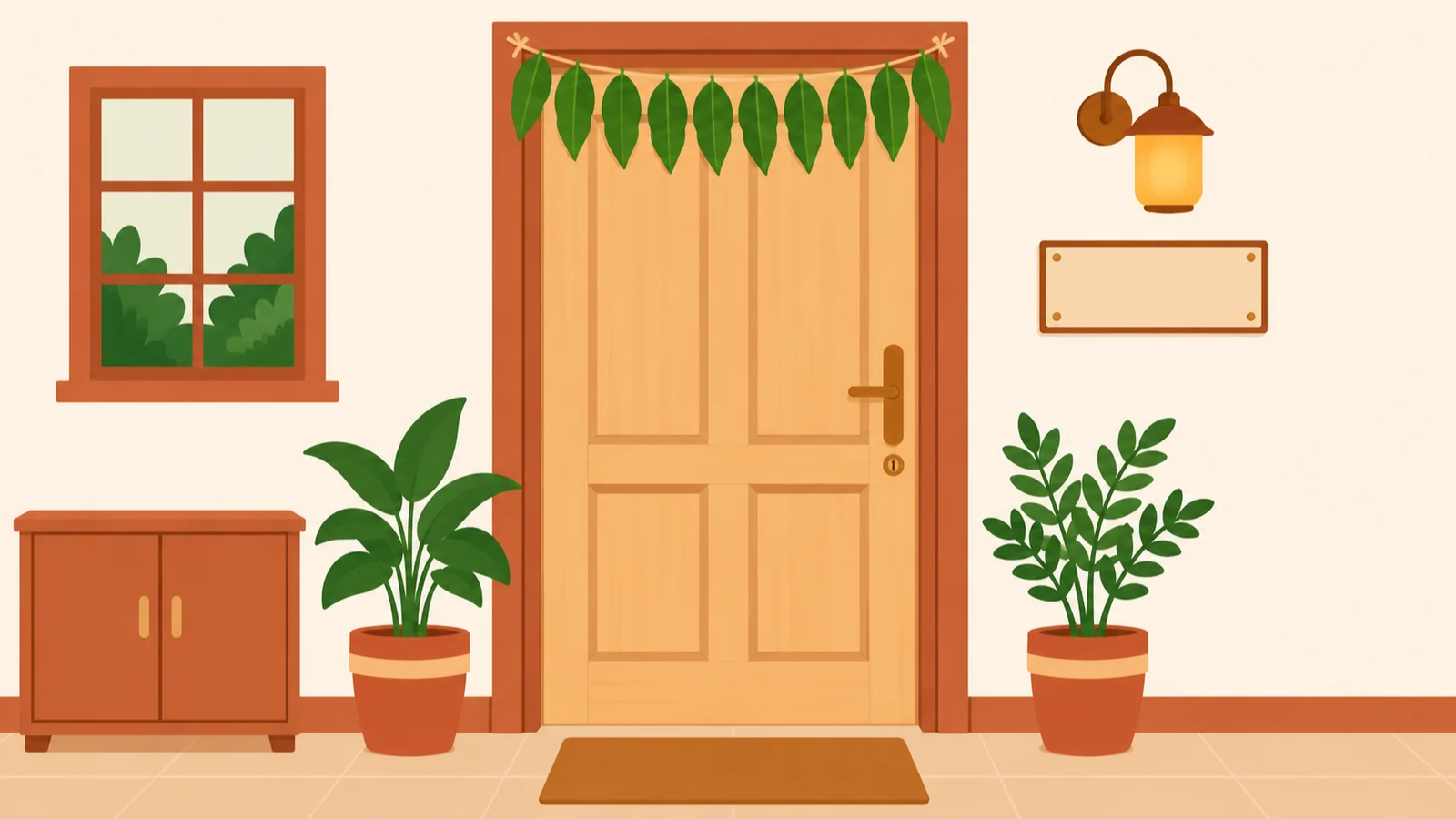
A clear nameplate beside the door is a common Vastu tradition and helps visitors find the home. Keep the doormat clean and the surroundings swept. A few healthy potted plants and a string of fresh mango leaves across the door frame are popular, simple touches.
Raised steps, a threshold and a door away from the corner
The entrance traditionally sits slightly above the ground level, with an odd number of steps leading up to it. Keep the door away from the corner of the wall: tradition gives at least about one foot, and many plans leave more.
Don'ts: what to keep away from the entrance
Dustbins, shoes and broken items
Do not keep a dustbin next to the main door, and do not leave a pile of shoes in front of it. A closed shoe cabinet to one side is the usual compromise in flats. Remove broken pots, old newspapers and unused items from the entrance.
Obstructions in front of the door
Avoid trees, electric poles, overhead wires and parked vehicles directly in front of the entrance gate or door. Vastu calls such an obstruction a vedha, and a clear approach is also safer and more practical.
Facing a wall, a temple or another front door
Tradition avoids a main door that faces a compound wall at close range, the door of a temple, or the front door of the house opposite in a straight line. Where this cannot be changed, practitioners suggest good lighting and plants to soften the view.
An underground tank beneath the entrance
A door built over an underground water tank or sump, or right at the corner of the house, is traditionally considered unsuitable. Plan the tank elsewhere; our Vastu tips for water tanks cover the usual positions.
Looking after the entrance door
Vastu treats a well-kept entrance as important as a well-placed one. Repair cracks, loose handles and broken locks without delay, and oil the hinges so the door opens silently. Avoid a self-closing mechanism that lets the door slam shut, and do not paint the main door black; natural wood, cream, light brown and other warm colours are the usual choices.
Many practitioners also prefer that the total number of doors, windows and ventilators in the house is an even number that does not end in zero. Keep the entrance lit in the evening and clean it regularly, especially the threshold. Our guide to entrance and home lighting suggests fittings and colours.
Do's and don'ts checklist for the entrance
Do
- Keep the main door in the north, east or north-east where possible.
- Light the entrance well in the evening.
- Fix a clear nameplate beside the door.
- Keep shoes in a closed cabinet to one side.
- Repair cracks and oil the hinges promptly.
Don't
- Keep a dustbin next to the main door.
- Let trees, poles, wires or vehicles block the door.
- Paint the main door black.
- Fit a self-closing mechanism that slams the door.
- Build the entrance over an underground tank.
When you can't change the entrance: flats and rented homes
In a flat, the door position, the corridor and the neighbours' doors are fixed. Focus on what you can control: a warm light, a clean doormat, a clear nameplate, healthy plants and a closed shoe cabinet set to one side. If your door faces a neighbour's door directly, a small plant or a light screen to the side can give both homes more privacy.
If the door is in the south-west or faces a wall or lift, keep it well lit, clean and calm in colour rather than attempting structural changes. Our Vastu tips for flats cover other fixed layouts. These are traditional suggestions, and any change to a shared corridor must follow society and fire-safety rules.
Vastu Shastra is a traditional system of architectural guidance. This article describes traditional recommendations; it is not medical, financial, structural or legal advice. For structural changes consult a qualified architect or engineer.
Frequently asked questions
What can be done when two flats' front doors face each other?
Tradition prefers that a main door does not line up exactly with the door opposite, but in apartment corridors this is common and usually cannot be changed. Practitioners suggest a warm light, a clean doormat and a small plant or light screen to one side, which also gives both homes more privacy.
Why should a dustbin not be kept near the front door?
Vastu treats the entrance as the face of the home, so it should be clean and welcoming. A dustbin by the door brings smell, insects and clutter to the first place guests see. Keep bins in the kitchen, utility area or outside the house away from the main door.
Is a self-closing front door a problem in Vastu?
Many practitioners advise against a self-closing door that slams shut, preferring a door that opens and closes smoothly and quietly. If a building or fire rule requires a door closer, choose a soft-closing type and keep it adjusted so the door does not bang.
Can the entrance of a home face a temple?
Traditional guidance avoids a main door that directly faces the door of a temple. Where a home already faces one, practitioners usually suggest keeping the entrance clean, well lit and calm rather than making structural changes. A temple at a distance or to the side is not usually treated as a concern.
Where should shoes be kept near the entrance?
Keep shoes in a closed cabinet or rack set to one side of the entrance, not in front of or directly beside the door. Many practitioners prefer the south or west side of the entrance area for a shoe cabinet, keeping the north-east part clear and clean.
Written by
Nitin Dhiman
Founder & Editor, VastuWiki
Nitin Dhiman is the founder and editor of VastuWiki and reviews every article for accuracy and plain language. He is also the founder and editor-in-chief of Maxabout Autos, where he has spent eight years writing and editing for Indian readers. At VastuWiki he turns traditional Vastu Shastra guidance into clear, practical advice for homes, offices, shops and plots, and keeps each article up to date.
More articles by Nitin Dhiman
Comments (0)
No comments yet. Be the first to share your thoughts.